


💧 Growing Succulents: A Guide to Water Propagation
- Nov 27, 2025
- 2 min read

While the most common method for growing succulents involves soil, many varieties can be successfully propagated (grown) using water. Water propagation is a popular technique for growing new plants from leaf cuttings or stem cuttings, allowing you to watch the root development process clearly.
Here is a step-by-step guide on how to propagate succulents using water, along with important tips for success.
I. Preparation: Taking the Cuttings
Water propagation works best for stem cuttings, though you can also use individual leaves.
1. Stem Cuttings (Recommended)

Cut the Stem: Use a clean, sharp knife or shears to cut a healthy piece of stem from the parent plant. Ensure the cutting is at least 2–4 inches (5–10 cm) long.
Remove Lower Leaves: Gently remove the leaves from the bottom inch or two of the stem. This bare section is where the roots will emerge.
2. Leaf Cuttings

Twist Off: Gently twist a healthy, plump leaf off the stem. Ensure you get a clean break at the base of the leaf without tearing it.
II. The Crucial Curing Phase (Callousing)

This step is non-negotiable for all succulent propagation methods.
The Purpose: Succulents hold a lot of moisture. If you place a fresh cut directly into water, the open wound will quickly absorb too much moisture, leading to rot. Curing allows the wound to dry out and form a protective "scab" or callus.
Process: Place your cuttings (stems or leaves) in a dry area out of direct sunlight for 3–7 days. The thicker the stem, the longer the curing time needed. A good callus looks dry and slightly sealed.
III. Setting up the Water Propagation Station

Once the cuttings are callused, they are ready for water.
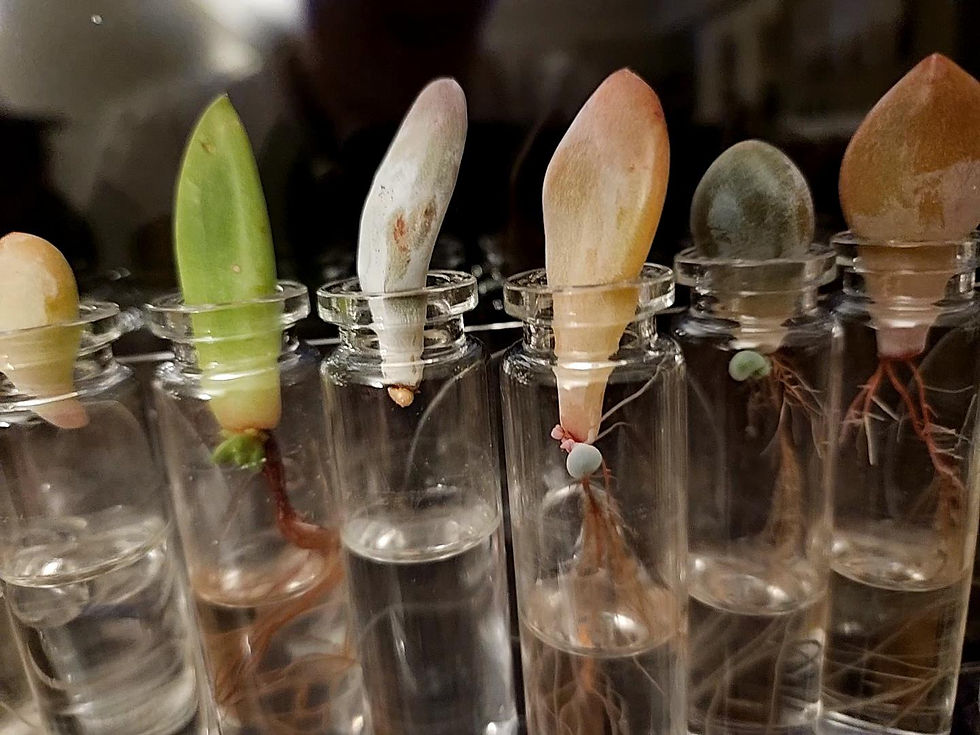
Choose a Container: Use a small glass jar, vial, or bottle. Clear containers are best so you can monitor root growth.
Add Water: Fill the container with clean tap water or distilled water.
Position the Cutting: This is the most important step for stems:
The stem base must be placed just above the water line, not submerged.
You need to use plastic wrap, foil, or a small bottle opening to support the cutting so that only the very bottom tip or the bare stem is suspended right above the water (1–2 mm gap). The roots will grow down to reach the water.
For leaves, the callused end can rest lightly on the water's surface or just above it.
Placement: Put the container in a spot that receives bright, indirect light. Avoid direct sun, which can heat the water and damage the roots.
IV. Monitoring and Transplanting

Root Growth: You should see small, white or pink roots developing within 2–4 weeks.
Water Change: Change the water every few days, or whenever it looks cloudy, to keep it oxygenated and prevent bacteria growth.
Transplanting to Soil: Wait until the roots are at least 1 inch (2–3 cm) long before transplanting. The roots grown in water are different from those grown in soil, and rushing the process can shock the plant.
Once the roots are established, plant the cutting in a well-draining succulent soil mix.
Do not water immediately after transplanting; wait a few days to let the tender water roots acclimate to the dry soil environment.


Comments